
A medical malpractice attorney in Kentucky often becomes the person families turn to when something goes wrong during medical care — something that should never have happened. Here in Eastern Kentucky, from Hazard to Whitesburg, from Pikeville to Prestonsburg, and from Hindman to Manchester, people trust their doctors, nurses, and hospitals to help them heal. Most of the time, they do. But when a preventable mistake causes serious harm, families deserve answers.
Medical malpractice cases are complex, emotional, and often overwhelming. This guide is written in plain, steady language to help you understand what medical malpractice is, how these claims work, and what steps you can take if you believe you or a loved one was harmed.
This post is for information only. Every case is different, and only an attorney can determine whether you have a medical malpractice claim, what damages may apply, and how to move forward.
This article is Part 5 of our 5‑Part Eastern Kentucky Personal Injury Series, which includes:
- Part-1: Car Accidents in Eastern Kentucky
- Part–2: Slip & Fall Injuries in Eastern Kentucky
- Part–3: Truck Accidents in Eastern Kentucky
- Part-4: Wrongful Death Claims in Eastern Kentucky
- Part–5: Medical Malpractice in Eastern Kentucky
Each post stands alone — but together, they give you a full picture of your rights after an injury or loss.
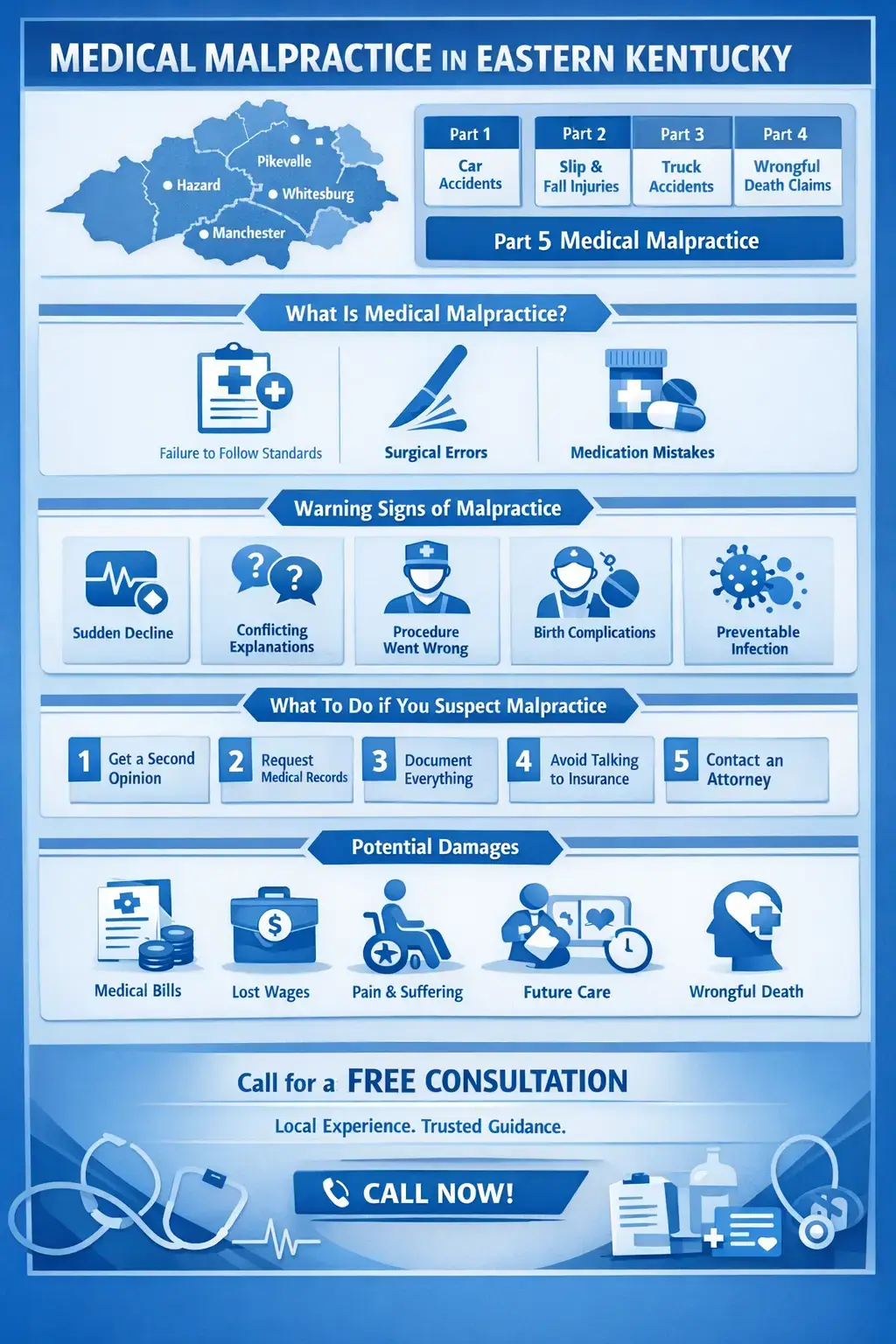
What Is Medical Malpractice?
Medical malpractice happens when a healthcare provider:
- Fails to follow accepted medical standards
- Makes a preventable mistake
- Causes harm that could have been avoided
It is not about a bad outcome or a treatment that didn’t work. It is about negligence — a failure to provide proper care.
Common examples include:
- Misdiagnosis or delayed diagnosis
- Surgical errors
- Medication mistakes
- Birth injuries
- Anesthesia errors
- Failure to monitor patients
- Ignoring symptoms
- Hospital infections caused by poor hygiene
In rural areas like Perry, Letcher, Knott, Clay, Floyd, Pike, and Rockcastle Counties, limited access to specialists can increase the risk of misdiagnosis or delayed treatment.
Common Signs Of Medical Malpractice
Families often sense something is wrong before they have proof. Common red flags include:
- A sudden, unexpected decline in health
- Conflicting explanations from medical staff
- A procedure that “didn’t go as planned”
- A diagnosis that doesn’t match symptoms
- A medication error
- A newborn with unexpected complications
- A preventable infection
- A loved one passing away without clear answers
If something feels off, it’s worth asking questions.

What To Do If You Suspect Medical Malpractice
1. Get a second medical opinion
Your health comes first.
2. Request your medical records
These are essential for evaluating your case.
3. Write down what happened
Dates, symptoms, conversations — details matter.
4. Avoid discussing the case with the hospital’s insurance
They may try to minimize or deny responsibility.
5. Contact an attorney
Medical malpractice cases require expert review and careful investigation.
Learn more about Heidi Hopfensperger
Why Medical Malpractice Cases Are Different
These cases are more complex than other injury claims because they require:
- Medical experts
- Detailed record reviews
- Testimony about standards of care
- Timelines of treatment
- Proof of negligence
- Proof of harm
Hospitals and insurance companies often fight these cases aggressively. A strong legal team helps level the playing field.
Damages You May Be Entitled To
Depending on your case, you may recover compensation for:
- Medical bills
- Future medical care
- Lost wages
- Pain and suffering
- Permanent disability
- Loss of earning capacity
- Wrongful death damages (if applicable)
Every case is unique — and only an attorney can determine what damages apply.
Why Local Experience Matters
Eastern Kentucky families deserve someone who understands:
- Local hospitals and clinics
- Rural healthcare challenges
- Limited access to specialists
- Long travel distances for treatment
- The culture of mountain communities
Heidi proudly serves families across:
- Perry County — Hazard, Buckhorn
- Letcher County — Whitesburg, Jenkins
- Knott County — Hindman, Pippa Passes
- Clay County — Manchester, Oneida
- Floyd County — Prestonsburg, Martin
- Pike County — Pikeville, Elkhorn City
- Rockcastle County — Mount Vernon, Brodhead
Local families deserve local guidance — and that’s exactly what she provides.
FAQ About Medical Malpractice Claims
Do I have a case?
It depends on the evidence. Only an attorney can determine this.
How long do I have to file?
Kentucky has strict deadlines — don’t wait to get answers.
Do I need medical records?
Yes — they are essential for evaluating your claim.
Do medical malpractice cases go to court?
Some do, but many settle before trial.
Is the first consultation free?
Yes — and it’s a chance to get your questions answered.
Call To Get Another Opinion
If you believe you or a loved one was harmed by medical negligence, you don’t have to face the hospital or insurance company alone. Your first consultation is free, and we’ll walk through your options with clarity and compassion.